






Benefits of Using Tanning Lotion Safely

Short answer: Traditional tanning lotion, whether you use it outdoors or in a tanning bed, still relies on UV exposure to work, which means dehydration, faster skin aging, and real UV risk. A gradual self tanning lotion gives you the same kind of deep, buildable color and hydration benefits without any of that. If you still choose to get sun, proper SPF and skin prep matter more than any lotion you put on beforehand.
Ever wonder why your tan looks uneven or fades days after you finally hit that perfect shade? The difference between a short-lived glow and a deep, even bronze almost always comes down to hydration. Skin that is dry, tight, or depleted simply does not hold color the same way healthy, moisturized skin does. That is true whether you are using traditional tanning lotion in the sun, in a tanning bed, or switching over to a self tanner that skips UV exposure altogether.
Table of Contents
- Why Hydration Changes Everything
- What Traditional Tanning Lotion Actually Does
- Why We'd Rather You Use a Self Tanner Instead
- If You're Still Going to Tan in the Sun or a Bed
- How to Apply for an Even Glow
- The Tanning Plateau, and Why Self Tanner Doesn't Have One
- Your Smarter Tanning Routine
- FAQs
Why Hydration Changes Everything
Hydrated skin absorbs and holds color more evenly. When skin is dry, it reflects light unevenly and sheds faster, which is why tans fade quickly and often look patchy. Moisturizing ingredients help keep the surface smooth so color develops gradually instead of clinging to dry areas.
This is exactly why we built our gradual self tanning lotion to hydrate and tan at the same time, rather than treating moisture as a separate step you have to remember.
What Traditional Tanning Lotion Actually Does
If you have used tanning lotion in the sun or in a tanning bed, you have probably come across accelerators and bronzers, and it is worth knowing what they actually are.
- Accelerators are designed to support your skin's natural melanin production, meaning they work with UV exposure to build color over time. Without UV, they do not do much on their own.
- Bronzers deliver immediate cosmetic color that simply washes off, not a real tan at all.
- Tingle lotions increase circulation to intensify results. They are not beginner-friendly and should be avoided on fair or sensitive skin.
All three of these are built around one thing: getting more out of your time in the sun or in a bed. That is the piece worth pausing on, because it means the "tan" is still coming from UV exposure, the lotion is just amplifying it.
Why We'd Rather You Use a Self Tanner Instead
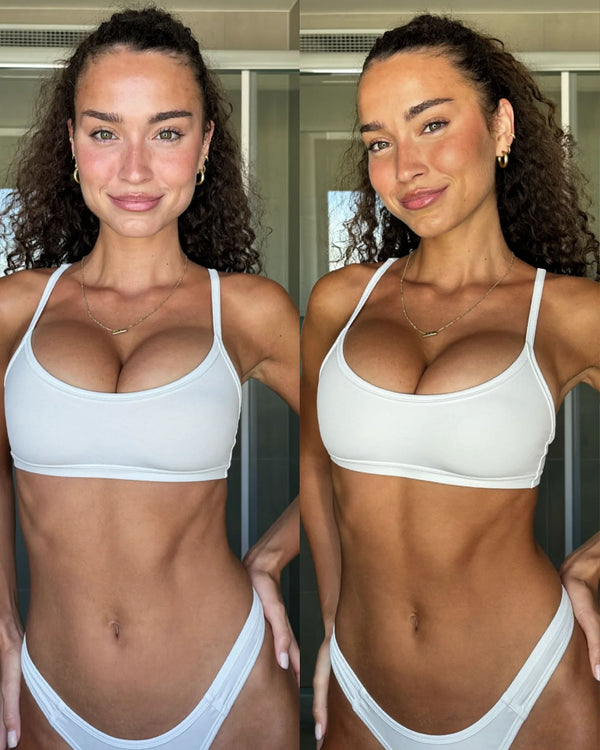
Toni has been open about why she moved away from traditional tanning lotion and sun exposure entirely, and it comes down to two things.
The first is personal. Her mom was diagnosed with melanoma, and that experience made UV exposure something she was never willing to treat casually, in the sun or in a bed.
The second is just as honest: she doesn't want the look that comes with years of UV tanning either. In her own words, she'd rather have the depth of color without the dehydration and the leather-skin look that heavy sun or bed use tends to leave behind over time. She has said more than once that a good self tanner can give you the same kind of deep, all-day-in-the-sun color, without the dehydration or the long-term texture changes that come with actually getting that color from the sun.
If you want the fuller version of that story, we go into it in Is Self Tanner Safe?
If You're Still Going to Tan in the Sun or a Bed
We're not going to pretend everyone reading this is ready to give up sun tanning or tanning beds entirely, and we'd rather help you do it more safely than not address it at all. We asked Lauren, a licensed esthetician who has been practicing since 2012 and co-owns The Skin Spa and Acne Clinic in St. George, Utah, what she actually tells clients who still want that UV color.
Her advice starts with understanding what your sunscreen is actually doing. SPF 15 blocks about 93% of UVB rays, SPF 30 blocks about 97%, and SPF 50 blocks about 98%. Past SPF 30, the difference is small, so an SPF 70 or SPF 100 isn't doing dramatically more than a well applied SPF 30. Reapplying every couple of hours matters more than chasing a higher number on the bottle.
If you find that you burn no matter how much sunscreen you use, she recommends switching to a zinc oxide sunscreen instead of a chemical one. She personally uses Blue Lizard for her own family, including a daughter with sensitive skin.
One more thing worth knowing: tanning accelerators and bronzers offer no UV protection on their own. If you are using one outdoors, always apply sunscreen as well, and give it time to absorb before you go out. The lotion is not a substitute for SPF, no matter what the label implies.
How to Apply for an Even Glow
Application technique matters just as much as the formula, and this applies whether you are using a self tanner or a traditional tanning lotion. Always start with exfoliated skin and apply in sections using circular motions. This helps distribute product evenly and prevents streaks.
For areas like elbows, knees, and ankles, apply product last using only what remains on your hands. To reach difficult areas like your back, a tanning mitt or a dedicated self tanning back applicator make a noticeable difference. Our full How to Self Tan: The Ultimate Guide covers the entire process from prep to aftercare if you want more detail.
The Tanning Plateau, and Why Self Tanner Doesn't Have One
If you have used traditional tanning lotion for a while, you may have hit what's called a tanning plateau, where your skin adapts to the same UV routine over time and stops darkening as much. Some people respond by switching formulas or using tingle lotions to push past it, which is exactly the kind of escalation that leads to more UV exposure, not less.
Self tanner does not have this problem, because the color isn't coming from a biological response to UV, it's a surface reaction with DHA. That means you get the same depth of color every time you apply, without needing to push your skin harder to get there. If you are trying to decide between formats, our Mousse vs. Lotion vs. Cream guide breaks down which one fits your routine best.
Your Smarter Tanning Routine
A beautiful tan is built through consistency and skin care, not shortcuts, and that's true whether you're set on the sun or ready to make the switch.
- Hydrate daily to maintain smooth, receptive skin, whichever method you use.
- Choose self tanner over UV if depth of color is the goal but leather skin and dehydration are not.
- If you still tan in the sun or a bed, use real SPF, reapply often, and don't rely on an accelerator to protect you.
- Apply evenly using proper tools for a streak-free finish.
For subtle, buildable color with a skin-first approach, our gradual self tanning lotion is built to hydrate and tan at once. Men looking for the same natural, even result can use the same lotion, formulated to work with thicker skin and body hair too.
FAQs
Does tanning accelerator actually work without sun or a tanning bed?
Not really. Accelerators are designed to support melanin production during UV exposure. Without UV, they don't do much on their own.
Is tanning lotion the same as sunscreen?
No. Traditional tanning accelerators and bronzers offer no UV protection. If you're tanning outdoors, you still need a separate sunscreen.
Why would I switch from tanning lotion to self tanner?
Self tanner gives you a similar depth of color without the dehydration, UV risk, or long-term skin texture changes that come with sun or tanning bed use.
What SPF should I actually use if I'm still tanning in the sun?
SPF 30 is the practical sweet spot. SPF 15 blocks about 93% of UVB rays, SPF 30 blocks about 97%, and SPF 50 blocks about 98%, past SPF 30 the difference is minor. Reapplying often matters more than the number on the bottle.
What is a tanning plateau?
It's when skin adapts to repeated UV exposure and stops darkening as much over time. Self tanner doesn't have this issue since the color comes from a surface reaction, not a biological UV response.
Should I use zinc oxide sunscreen instead of chemical sunscreen?
If you tend to burn no matter how much sunscreen you apply, a zinc oxide formula is often more effective, especially for sensitive skin.


