






How to Choose the Right Pilates Accessories

Short answer: You don't need a full studio setup, a good mat, hand weights, a block, and resistance bands cover most of a home practice. Toni treats Pilates as longevity training rather than a calorie-burning workout, prioritizing consistency and control over intensity. The right accessories, and the right activewear, matter because Pilates exposes fit and fabric issues that traditional lifting never reveals, waistbands rolling, tops shifting, fabric going sheer mid-stretch.
Table of Contents
- This Is Actually Part of Our Routine
- Why Toni Actually Does Pilates
- Why Toni Prefers Mat Over Heat
- What You Actually Need
- Where the Real Progress Shows Up
- Choosing Accessories That Actually Support Your Practice
- Understanding the Equipment
- Caring for Your Gear
- The Crossover to Strength Training
- Common Questions
This Is Actually Part of Our Routine
Toni does Pilates multiple times a week, and she and Patt go together to a reformer class every Wednesday night. This isn't a category we're speaking on from the outside. It's a standing date night, and it does a few things for us. It gets us out of the house and keeps us accountable to each other. It gives us real quality time. And it lets us watch each other actually get better at the movements over time, in real time, side by side. Wednesday reformer didn't start as a one-off activity either, it became part of the weekly schedule, and that consistency is what made showing up almost automatic instead of something we had to talk ourselves into.
Not sure which practice these accessories fit best? Our Lagree vs Pilates breakdown can help you compare the two.
Why Toni Actually Does Pilates
Toni doesn't treat Pilates as a calorie-burning workout. She treats it as longevity training. What keeps her coming back is how it builds real strength and control without beating up her body the way harder, higher-impact training can over time. That distinction matters more than people think. A lot of workouts trade short-term intensity for long-term wear and tear. Pilates has never asked her to make that trade.
That's also why she'd rather do Pilates several times a week, year-round, than constantly chase harder workouts that take days to recover from. Consistency over intensity is the actual philosophy, showing up regularly and sustainably beats going all-out and needing a week off afterward.
The other piece people underestimate is the mind-muscle connection. Toni focuses on slowing movements down and staying in control rather than rushing through reps just because the resistance feels light. A slow, controlled hold does more than a fast, sloppy one, even when the weight or resistance involved is exactly the same.
Why Toni Prefers Mat Over Heat
Toni's real preference is mat Pilates, sculpting to the beat, without the heat. Hot yoga and heated Pilates can raise cortisol levels, which can actually work against you instead of for you. That's not a small detail. If your goal is recovery, control, and sustainable strength, adding unnecessary heat stress isn't always the upgrade people think it is.
What You Actually Need
You don't need a full studio setup to start. A good mat, a pair of hand weights, a block, and a set of resistance bands will cover you. That's genuinely all Toni uses for most of her mat practice at home. Want to see exactly how to put this gear to use in a full routine? Our Pilates workout at home guide walks through it.
Where the Real Progress Shows Up
Toni doesn't measure progress by how much she sweats. She measures it by longer holds, better balance, smoother transitions between movements, more control throughout the exercise, and noticeably less shaking on holds that used to be genuinely difficult. Sweat tells you very little about whether you're actually improving. Those five things tell you a lot.
Between reformer and mat work, that shows up most clearly in core holds, plank on the reformer, the knee stretch hover, the bear hold, reverse plank hold, the hundred hold, and the teaser hold, balancing at the top for ten to twenty seconds.
Toni can hold most of these for a couple of minutes at a time. Patt had to get good, fast, just to keep up. That gap closing over time is exactly the kind of growth you notice when you're doing this together consistently instead of showing up once and calling it done.
Choosing Accessories That Actually Support Your Practice
The right accessories add intention to your movement. They help activate deeper muscle groups, improve balance, and create controlled resistance that challenges your body without sacrificing form. They also keep a routine feeling fresh instead of stale, which matters if you're doing this multiple times a week the way Toni does.
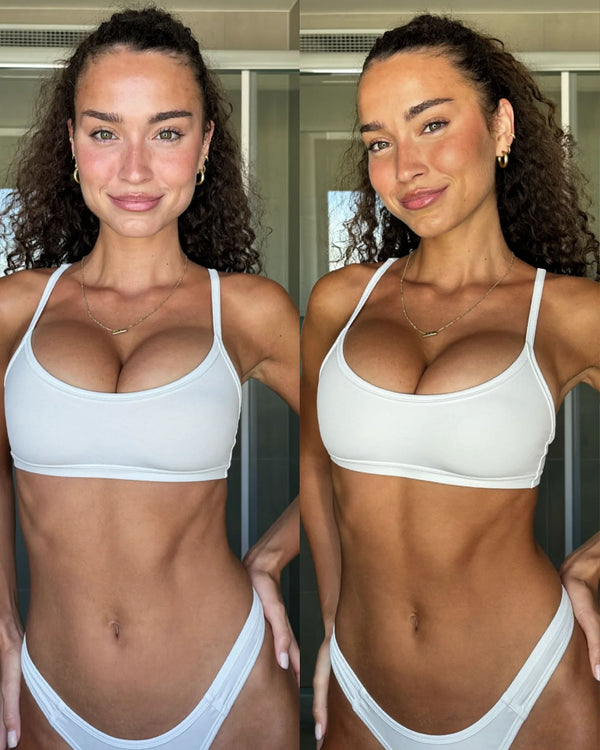
What you wear matters just as much, and Toni has actually used Pilates as one of the environments where MAKAI activewear gets tested, specifically because it exposes issues traditional lifting never does. Controlled, full-range movement puts fabric and fit under a completely different kind of stress than explosive, repetitive exercises:
- Waistbands rolling during a teaser or a roll-up, exactly the kind of deep spinal flexion that reveals a poorly constructed waistband immediately.
- Tops shifting during overhead movements, where a looser cut has nowhere to hide.
- Fabric going sheer during deep stretches, something you'd never notice in a squat rack but shows up instantly in a full split stretch or a deep forward fold.
- Clothing needing to actually move with the body through slow, controlled, full-range positions, not just survive a quick, explosive rep.
That's a different bar than most activewear is built to meet, and it's exactly why Pilates has become one of Toni's real testing grounds for new pieces before they ever reach customers. Supportive, well-designed pieces from our Pink Workout Set keep you focused on the hold instead of adjusting your fit mid-class.
Understanding the Equipment
Pilates equipment ranges from small, portable tools to full studio setups, and each one serves a different purpose.
Pilates Reformer
The reformer uses springs and a sliding carriage to create controlled resistance across the whole body. It's low-impact and joint-friendly, which is part of why a Wednesday night class works so well for us as a weekly reset rather than something that beats up the body. Mat is still Toni's personal preference day to day, but she keeps reformer in the rotation because it gives a different kind of feedback, specifically around control and stability, that mat alone doesn't always expose. It's a good way to find real weaknesses in core work that can otherwise stay hidden.
Weights, Bands, and Rings
Light dumbbells or ankle weights add resistance without overpowering the movement. Resistance bands and Pilates rings are staples for a reason, they're lightweight, versatile, and travel well if you're keeping a home practice going between studio sessions.
Balls and Rollers
Exercise balls challenge balance and force deeper core engagement. Foam rollers support recovery afterward. Both round out a practice that's about more than just the workout itself.
Mats and Grip Socks
A good mat is the foundation of any floor-based Pilates practice, it provides cushioning, grip, and stability. Grip socks add confidence during standing or balance work, especially once you're holding positions for longer stretches.
Caring for Your Gear
Clean your mat and equipment after use, keep bands away from heat and sunlight, and check everything regularly for wear. Gear that's actually taken care of holds up for the long, consistent practice this is meant to support.
The Crossover to Strength Training
Pilates was never meant to replace other training for Toni, it complements it. The posture, core stability, and overall movement quality she's built through consistent Pilates practice carries directly into her other workouts, better bracing under load, more control through the bottom of a squat, less compensation from the lower back. It's not a substitute for strength training. It's the foundation that makes the rest of it work better.
Common Questions
What should beginners start with?
A mat, hand weights, a block, and resistance bands. That's genuinely all you need to get moving.
Can Pilates accessories be used for other workouts?
Yes. Bands and rings in particular translate well into strength training, stretching, and recovery routines outside of Pilates itself.
Does heat actually make Pilates better?
Not necessarily. Heated formats can raise cortisol levels, which can work against your goals depending on what you're training for. Mat Pilates without added heat is a completely valid, and often preferred, way to train. Many of these same tools also cross over into what is sculpt yoga, if you're curious about that format too.
Why would I do reformer if mat is the preferred format?
Reformer gives feedback on control and stability that mat alone doesn't always expose, which makes it useful for finding weaknesses, especially in core work, even if mat stays your day-to-day preference.
How do you actually know if you're improving at Pilates?
Not by how much you sweat. Longer holds, better balance, smoother transitions, more control throughout the movement, and less shaking on exercises that used to be difficult are the real signs of progress.
Does Pilates replace strength training?
No, it complements it. The posture, core stability, and movement quality built through Pilates carries over into other workouts rather than replacing the need for them.
We Practice What We Preach
This isn't content written from the outside looking in. Wednesday nights are real, the mat routine at home is real, and the growth we've seen in each other over time is real. We practice what we preach.
Shop the Pink Workout Set.


