


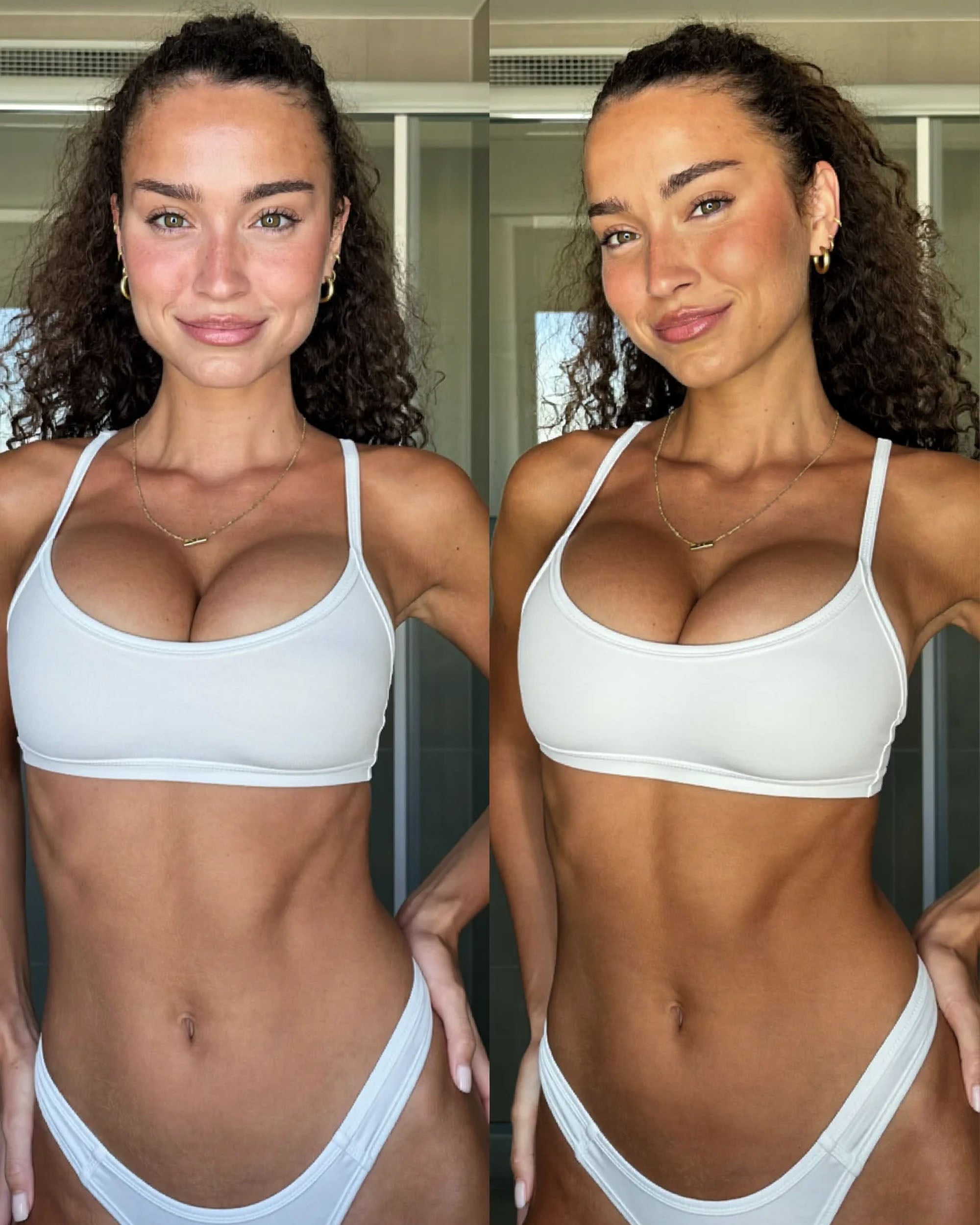


Is Self Tanner Safe? What Toni Learned From Years Behind the Spray Gun

Short answer: Yes, self tanner is genuinely safe when used correctly. DHA reacts with the outermost layer of dead skin cells to create color, it doesn't absorb into living tissue or require UV exposure. Many women use it comfortably through pregnancy after talking with their provider, sensitive skin can typically use it fine with a patch test first, and it works the same safe way for men, mature skin, and everyone in between.
If you Google "is self tanner safe," you'll find a lot of vague reassurance and not a lot of real answers. So we asked our co-founder Toni, who spent years as a NSTPA certified professional spray tan artist before MAKAI existed, to walk through what she actually told clients who asked her this question in the chair, over and over again.
Table of Contents
- How Self Tanner Actually Works on Your Skin
- Is Self Tanner Safe During Pregnancy and Breastfeeding?
- What About Sensitive Skin?
- Getting the Most Out of Your Self Tanner, Safely
- FAQs
- The Bottom Line
"Is spray tanning safe?" was the question Toni heard more than any other. Clients wanted to know if the solution absorbed into their skin, whether DHA was harmful, or if breathing in the mist could hurt them. Her answer never changed: when applied correctly, spray tanning is a much safer alternative to UV tanning or tanning beds, because it doesn't expose your skin to ultraviolet radiation at all. She always encouraged clients to use protective items like nose filters, lip balm, and eye protection, and to avoid intentionally inhaling the mist. Once people understood that a professional spray tan gives you cosmetic color without UV exposure, it usually eased their biggest worry on the spot.
Patt, who worked alongside Toni for years, adds a few more habits she always stuck to during a session: hairnets to protect hair from overspray, sticky feet to prevent solution from transferring to the floor, extra moisturizer worked into dry areas like elbows and knees before application, and a face mask so nothing gets inhaled during the process.
How Self Tanner Actually Works on Your Skin
Toni explains DHA the same way every time, because it's the explanation that actually makes people relax.
"I always explain it like this: your skin is like the paint on the outside of a house. A spray tan changes the color of the paint. It doesn't soak through the walls and change what's inside the house. DHA reacts with the proteins in the very top layer of dead skin cells, which is why the tan gradually fades as those cells naturally shed over the next several days."
There's an important nuance worth adding for accuracy. While DHA is designed to react with that outermost dead skin layer, that doesn't mean there is zero possibility of any exposure under all circumstances. That's exactly why professional technicians recommend avoiding inhalation of the spray and protecting your eyes and lips during application. The color itself comes from a surface reaction, not from the product needing to be absorbed into living tissue.
The Myth That All Tanning Is the Same
One of the biggest misconceptions Toni still runs into is the idea that all tanning works the same way. Most people don't actually know what DHA is or how self-tanning works, they just know they want color. That's part of why so many people still choose tanning beds despite the well-documented UV risks. Once someone understands that self-tanners create color through a cosmetic reaction on the outermost layer of dead skin, not by exposing skin to ultraviolet rays, it changes how they think about tanning entirely.
The Myth That Darker or Longer Means Longer-Lasting
Another myth Toni corrects constantly: applying more product, or leaving it on longer, does not make your tan last significantly longer. How long a tan lasts actually comes down to your skin's natural exfoliation cycle, your hydration, and your aftercare. Most of the streaky or uneven "bad tans" Toni has seen over the years were caused by poor prep or aftercare, not the product itself. Good skin prep and safe application habits with a tanning lotion make a much bigger difference than product strength ever will.
Is Self Tanner Safe During Pregnancy and Breastfeeding?
Toni spray tanned dozens of pregnant clients over the years, and knows many women who continued using self-tanner throughout their pregnancies.
What she noticed consistently was how much better it made them feel about themselves. Pregnancy brings enormous physical changes, and a lot of women told her they didn't feel like themselves anymore. Something as simple as a healthy-looking glow gave them a real confidence boost during a time when they were adjusting to a changing body. It was never about looking "perfect." It was about feeling a little more like themselves again.
What Toni Actually Told Pregnant Clients
Whenever a pregnant client asked if self-tanning was okay, Toni always encouraged them to talk to their healthcare provider first, especially with a high-risk pregnancy or any concerns. Once that conversation happened, the focus shifted to making the application as comfortable and cautious as possible.
For professional spray tans, that meant using nose filters, lip balm, and eye protection, and avoiding intentionally inhaling the mist. With self-tanning lotions, mousses, or drops applied at home, inhalation isn't typically a concern at all, since the product is rubbed directly onto the skin rather than sprayed into the air.
From an ingredient standpoint, the primary tanning ingredient in most self-tanners is DHA, and it isn't intended to create color through UV exposure the way the sun or tanning beds do. Many expectant mothers saw self-tanning as a cosmetic alternative to sunbathing, since it gave them the look of a tan without the UV exposure. Some women who prefer to be extra cautious choose to wait until after the first trimester, though that's a personal decision made with a healthcare provider rather than a universal medical recommendation.
A Note for Breastfeeding Mothers
For breastfeeding mothers, the advice is practical: avoid applying self-tanner directly to the nipples or areola before nursing, and make sure the product has fully developed and been rinsed off according to the directions before skin-to-skin contact with the baby.
Toni's goal has never been to convince anyone to tan during pregnancy. It's to give accurate information, encourage a conversation with a healthcare provider, and support whatever decision feels right. For a lot of her pregnant clients, a natural-looking glow was a small thing that made a big difference in how confident and comfortable they felt.
What About Sensitive Skin?
In all her years spray tanning clients, Toni found genuine allergic-type reactions to be quite uncommon. She occasionally saw mild redness, itching, or a breakout afterward, but it usually wasn't clear right away that the self-tanner itself was the cause.
More often, the reaction traced back to something else entirely: an existing sensitivity to fragrance or preservatives, other skincare products used recently, residue left on the skin before tanning, or irritation from shaving or exfoliating too aggressively beforehand. Formulas vary widely beyond DHA alone, in fragrances, botanical extracts, preservatives, bronzers, and dyes, any of which could be behind a sensitivity for a given person.
Toni's Own Sensitive Skin Story
One thing we're genuinely proud of with MAKAI is that we formulated with sensitive skin in mind from day one. Toni herself has extremely sensitive skin and has historically reacted to a lot of skincare and cosmetic products. Throughout development and testing, she was able to use our self-tanners without the breakouts, rashes, or hives she's dealt with from other products. That's a meaningful validation of the formula, because it had to work for someone who is personally very difficult to formulate for. This same sensitive-skin standard is a big part of why we wrote a full guide on the best self tanner for pale skin, since fair and sensitive skin so often go hand in hand.
Why We Still Recommend a Patch Test
No skincare product can be guaranteed to work for everyone, since everyone's skin chemistry is unique. That's why we always recommend a patch test before using any new self-tanner, especially if you have sensitive skin, eczema, known cosmetic allergies, or a history of skin reactions. A small patch test can catch a potential sensitivity before you apply the product all over your body.
Getting the Most Out of Your Self Tanner, Safely
One precaution Toni wishes more people took seriously is proper skin preparation and aftercare. Exfoliating before application, applying to clean and dry skin, avoiding lotions that create a barrier, and moisturizing daily afterward make a dramatic difference in both how your tan looks and how long it lasts. Most bad spray tans come down to poor prep or maintenance, not the product itself.
It's also worth repeating something we say often: self tanner gives you cosmetic color, not sun protection. Sunscreen and self tanner do two completely different jobs, and you still need SPF anytime you're outside, tan or no tan. And once your color has developed, a few small habits, like protecting your tan from clothing and sheets while it sets, go a long way toward keeping things even.
Education has always been a core part of MAKAI's philosophy. Before launching, Patt and Toni spent an enormous amount of time researching self-tanning ingredients, skin health, and formulation science, not just to create a product with great color, but to help people understand why the process works so they could get consistently better results. That's part of why we sat down for a full interview with a licensed esthetician to talk through common skin myths, and why we've invested so heavily in educational content across guides, videos, and application tutorials. The more people understand their skin and how self-tanning actually works, the more confident they feel, and the better their tan looks.
FAQs
Is it safe to breathe in the mist during a spray tan?
Professionals recommend avoiding intentionally inhaling the mist and using nose filters as a precaution, since the color reaction is meant to happen on the skin's surface, not inside the body.
Does DHA absorb into your bloodstream?
No. DHA reacts with proteins in the outermost layer of dead skin cells, a surface reaction, not something that soaks through to living tissue underneath.
Is self tanner safe to use during pregnancy?
Many women use it comfortably throughout pregnancy after talking with their healthcare provider first, especially with a high-risk pregnancy or specific concerns.
Can I use self tanner while breastfeeding?
Yes, with one precaution: avoid applying it directly to the nipples or areola before nursing, and make sure the product has fully developed and rinsed off before skin-to-skin contact with your baby.
Is self tanner safe for sensitive skin?
Genuine allergic reactions are uncommon. Most reactions trace back to fragrance, preservatives, other recent skincare products, or irritation from aggressive shaving or exfoliating rather than the self tanner itself. A patch test is still the safest first step.
Does self tanner protect my skin from the sun?
No. Self tanner gives you cosmetic color only, not UV protection. Sunscreen is still necessary any time you're outside, tan or not.
Does applying more product make a tan last longer?
No. How long a tan lasts comes down to your skin's natural exfoliation cycle, hydration, and aftercare, not how much product you apply or how long you leave it on.
The Bottom Line
Self tanner, used correctly, is a genuinely safe way to get color without UV exposure. It works on the surface of your skin, not underneath it. It's something many women have used comfortably through pregnancy after talking with their provider. It's also something more men are asking about and using confidently every year, and the same safety principles apply no matter who's using it, which is exactly why we built a dedicated guide for men covering the specific questions they tend to have. And with the right prep and aftercare, it works for skin as sensitive as Toni's own, and just as well for skin that's simply lived a little longer. Age doesn't change any of this, which is exactly the point we make in our guide to the best self tanner for mature skin.
If you're ready to see what a formula built around all of this actually feels like, browse the full MAKAI self tanner collection and find the format that fits your skin and your routine.


