


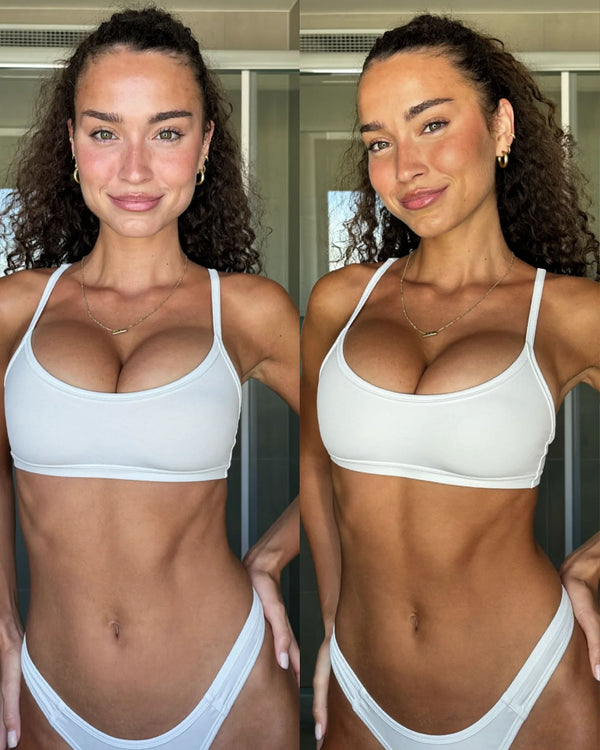


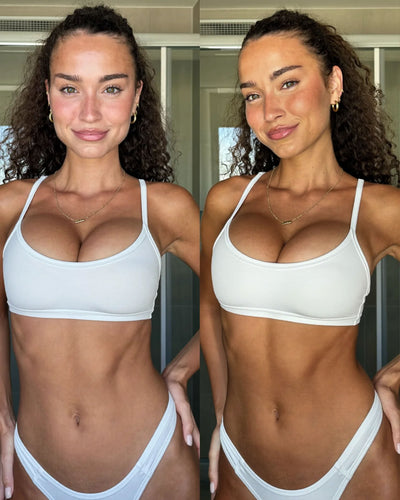


What is your self tan shade?

Short answer: Your shade choice isn't just about how fair or dark your skin is, it's about your undertone too. If you're fair with a reddish undertone, start with Medium or Dark and build up. If you tan easily or have an olive or more melanated undertone, Dark or Ultra Dark usually gets you there faster, and Ultra Plus has a violet tint built in specifically to keep olive tones from looking orange. If you'd rather skip straight to your answer, take our Find Your Glow quiz and get matched in under a minute.

Picking a self-tanner shade shouldn't feel like guessing. After years of professional spray tanning and formulating MAKAI's shades ourselves, we've found that most people overthink the depth of color and underthink their undertone, and that's usually where a shade choice actually goes wrong.
Table of Contents
- Why Your Undertone Matters as Much as Your Depth of Color
- If You Tan Easily, You Don't Need to Start Light
- Two Real Stories From Fair Skin to Confident Ultra
- What 550 Customers Told Us About Choosing a Shade
- Take the Quiz and Find Your Shade in Under a Minute
- FAQs
- Final Thoughts
Why Your Undertone Matters as Much as Your Depth of Color
If you have fair, reddish undertone skin that doesn't tan well and burns easily, start with a lighter shade like Medium or Dark until you get used to it. That's actually Toni's own skin type. She's fair, blonde, blue-eyed, and doesn't tan naturally at all.
The difference with MAKAI compared to most other self-tanners on the market is that our DHA levels aren't overblown the way a lot of competitor formulas are. That's what gives you a natural-looking tan instead of the orange or tacky, overly dark result so many people associate with self-tanner. For a full breakdown of why a darker guide color doesn't mean a darker or better tan, our post on the difference between bronzer and self-tanner covers exactly how that works.
Personally, Toni wears the Ultra shades, Ultra Dark and Ultra Plus, even with her skin tone. She's built up comfort with the color difference over time because it looks natural on her and fades evenly instead of turning patchy or splotchy.
If you have more of an olive undertone or more melanated skin, the Ultra shades are also a strong starting point, especially Ultra Plus. It has a violet tint built into the formula specifically to help balance out olive undertones, which keeps the color from leaning orange or looking overly tan and unnatural.
If You Tan Easily, You Don't Need to Start Light
The "start light and build up" advice really applies to fair, reddish undertone skin like Toni's, where going too dark too fast is more likely to look off. If you naturally tan easily, that advice doesn't really apply to you.
For people who tan easily, Dark or Ultra Dark is usually the better starting point. With Dark, you can layer additional coats if one application isn't quite enough for the depth you want. With Ultra Dark, a single coat is often all you need, especially if you already have a base tan going into it.
Two Real Stories From Fair Skin to Confident Ultra
Toni's Sister: A Fair-Skin Turnaround
Toni's older sister is a non-tanner with the same skin type as Toni, fair, blonde, and skin that's more built for a mountainous, cold, dry climate like Utah. Her first experience with self-tanner, a different brand, was a mess. The color change wasn't worth the time it took to apply, and even once she got a noticeable result, it felt tacky on her skin.
When she switched to MAKAI and started with Ultra Dark, the difference was night and day. She saw a noticeable but still subtle change, along with a much more natural fade. She liked the results enough that she now orders four bottles of Ultra Dark at a time, so she never runs out when it's back in stock.
A Desert Pool Mom Who Ditched the Sunburn
Another customer of ours lives in southern Utah, where the climate is dry and hot like Phoenix or Las Vegas, with a long summer season. She's a consistent pool person but hated two things: the burn from being in the sun all day, and the sticky, oily feeling that came with it. For more on why sunscreen and self-tanner aren't in conflict with each other, our guide on wearing sunscreen over self-tanner covers exactly how to combine the two safely.
Now she still hits the pool with her kids and enjoys the southern Utah weather, but she keeps her tan look by using MAKAI about once every week to a week and a half, without the sun damage or the oily mess that used to come with getting that color naturally.
What 550 Customers Told Us About Choosing a Shade
We surveyed 550 of our own customers about their experience choosing a shade, and the results back up a lot of what we see in practice every day.
- Dark is the most commonly used shade overall, at 33.6 percent, followed by Medium at 28.2 percent, Ultra shades at 23.6 percent, and Light at 14.5 percent.
- 92 percent of respondents said they were satisfied or very satisfied with their shade.
- 74 percent have reordered or repurchased, and 85.6 percent say they're likely or very likely to reorder their current shade again.
- 52 percent said they were nervous about choosing a shade that was too dark. Of those nervous customers, nearly a third, 32.2 percent, ended up choosing an Ultra shade anyway.
- Only 15.1 percent ever felt they picked the wrong shade. The single biggest complaint in that group wasn't too dark or too light, it was the shade looking too orange or warm, at 5.1 percent of all respondents.
That last stat matters more than it might seem at first. The biggest source of regret isn't going too deep, it's an undertone mismatch, which is exactly why the violet tint in Ultra Plus exists in the first place. Fear of going dark also doesn't seem to predict what people actually end up loving. A third of nervous customers still ended up in an Ultra shade and stuck with it.
Take the Quiz and Find Your Shade in Under a Minute
If you'd rather skip the guesswork entirely, our Find Your Glow quiz asks a few quick questions and points you toward the shade that actually fits your skin, not just a generic fair-medium-dark chart.
FAQs
Does my undertone actually determine which shade I should buy?
It plays a real role, especially if you have an olive or more melanated undertone, where a shade like Ultra Plus with a violet tint can help prevent an orange cast. For fair, reddish undertone skin, undertone matters less for which shade to pick and more for how gradually you build up to it.
I'm nervous about choosing a shade that's too dark, what should I do?
You're not alone. Over half of our customers felt the same way, and nearly a third of them still ended up choosing an Ultra shade and are happy with it. If you're unsure, Dark is a buildable middle ground you can layer up from.
Why did other self-tanners make me look orange when MAKAI doesn't?
A lot of self-tanner brands use higher, less balanced DHA levels to create a more dramatic instant result, which is often what causes that orange or tacky look. MAKAI's formulas are balanced specifically to avoid that, and Ultra Plus goes a step further with a violet tint that helps neutralize orange tones on olive undertones.
How do I know when it's time to size up to a darker shade?
If you're consistently applying multiple coats of a lighter shade just to get the depth you want, that's usually a sign a darker shade would get you there in fewer applications. Dark and Ultra Dark are both good next steps depending on how much color you're chasing.
Final Thoughts
Choosing the right shade isn't really about picking a number on a chart, it's about matching your undertone and your comfort level with color, not just how fair or dark your skin naturally is. Whether you're easing in with Medium like Toni once did, or building confidence toward Ultra Dark like her sister, the right shade is the one that fades evenly and looks like you, not like you're wearing self-tanner.
Browse the full self tanner collection to find your shade, or take the quiz above if you'd rather get matched in under a minute.


