


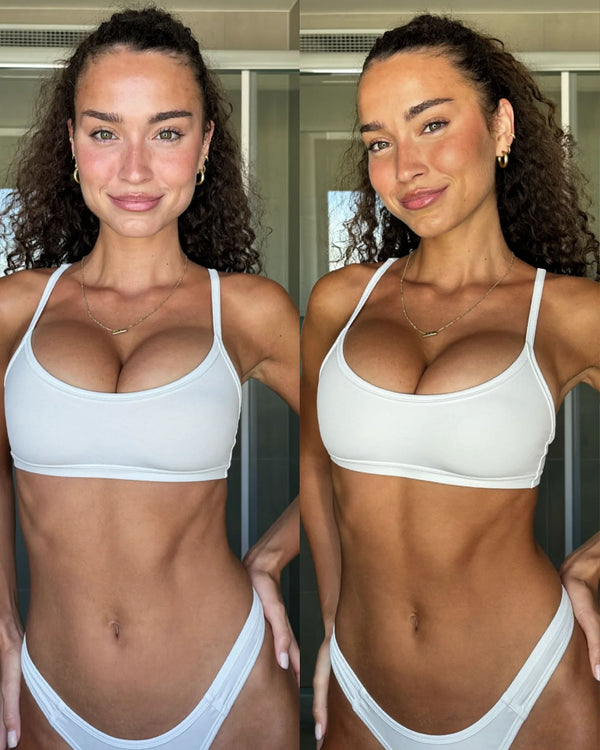


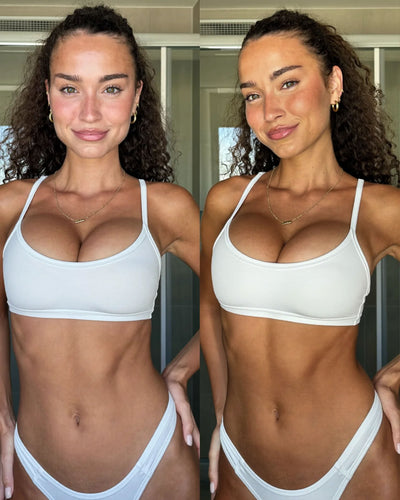


Can you wear Sunscreen over Self Tanner

Short answer: yes, you can wear sunscreen and makeup with a self-tanner, but the order matters. Let your self-tanner fully develop and rinse off before applying sunscreen or makeup on top. From there, both work with your tan instead of against it, and I will walk you through exactly how I layer these products with my own skin and with years of clients in the chair.
Table of Contents
- Can You Wear Sunscreen Over Self-Tanner
- Can You Self-Tan Over Makeup, or Wear Makeup Over Self-Tanner
- Why Sulfate-Free Products Matter for Your Tan
- A Note for Acne-Prone Skin
- The Contouring Trick I Teach Clients
- Common Myths About Tanning, Sunscreen, and Makeup
- FAQs
Can You Wear Sunscreen Over Self-Tanner
This is one of the questions I got asked the most in the chair, and it comes from a real fear that sunscreen will strip a fresh tan or that you cannot protect your skin once you have color on it. Neither is true in my experience.
My process is simple. I apply self-tanner to the full body first and let it develop completely. Once it is done developing, I rinse it off as normal. After that, sunscreen goes on exactly like it would on bare skin. I have never had an issue with sunburn doing it this way, and the sunscreen does not eat away at the tan or cause it to fade unevenly.
The mistake people make is trying to layer sunscreen on top of tanner that has not developed yet, or rushing the rinse step. Give the tan its full development window first. Once it is set, your skin underneath is protected the same way it always would be, and the sunscreen has nothing to interfere with. If you are still deciding between a bronzing tanner and a gradual formula before you even get to this step, my Bronzer vs. Self-Tanner breakdown covers exactly how they differ.
Can You Self-Tan Over Makeup, or Wear Makeup Over Self-Tanner
The answer depends on what kind of self-tanning product is on your face.
If you are using a traditional self-tanning mousse or a spray tan formula with DHA and color guard on your face, let it develop fully, then rinse it off before applying makeup. Those formulas are designed to build color and are not meant to sit under a full face of makeup while still active.
The Sunless by MAKAI Face Mist is different. It is water based and goes on completely clear, so there is no bronzer sitting on top of your skin. Once it develops, you get a natural glow underneath, and I can apply makeup directly over it without rinsing first. It behaves more like a skin prep step than a traditional tanner. Here is a short video showing exactly how I apply it:
So the short version:
- Face mist with a clear, water-based formula: can wear makeup over it once developed
- Mousse or spray tan formula with bronzer or color guard: rinse after developing, then apply makeup
Why Sulfate-Free Products Matter for Your Tan
If there is one product tip I repeat constantly, it is this: use sulfate-free formulas whenever you are combining tanning products with sunscreen or makeup. Sulfates strip color unevenly, which is what causes that patchy, faded look people blame on "bad tanner" when it is really the product they layered on top.
This applies to sunscreen, cleansers, and makeup removers. If it foams up a lot, check the label. Switching to sulfate-free versions is one of the easiest fixes for tan longevity that most people never think to make. According to the FDA's guidance on sunless tanners, DHA reacts with the outermost layer of skin, which is exactly why what you layer on top of it, sulfates included, can affect how evenly that color holds.
A Note for Acne-Prone Skin
Clients with acne-prone skin used to avoid face tanning altogether because they worried it would cause breakouts, and honestly, some formulas will. My advice for this skin type is to stick with a water-based face tanning option rather than a heavier bronzing mousse.
The MAKAI Face Mist also has jojoba oil in it, which is lightweight and skin-friendly rather than pore-clogging. It goes on clear, develops evenly, and I have not seen it trigger breakouts the way heavier formulas can. If you have struggled with congestion from spray tanning your face in the past, this is usually the fix.
The Contouring Trick I Teach Clients
This one is a favorite of mine and it surprises people every time. You can use self-tanning mousse to contour your face the same way you would with makeup contour products.
Apply the mousse along the areas you would normally contour, hollows of the cheeks, sides of the nose, jawline, and let it sit overnight. When you rinse it off in the morning, your face has natural-looking dimension built into the tan itself.
My favorite way to do this is to start with a base layer of the MAKAI Face Mist for even, all-over color, then go back in with self-tanning mousse to contour on top. Once that is rinsed and set, you need far less makeup to finish the look. Most days that means just mascara and a little blush instead of a full face. Not sure which shade of mousse would match your skin tone best for contouring? Our shade quiz makes that quick to figure out.
Common Myths About Tanning, Sunscreen, and Makeup
The biggest myth I hear is that you cannot wear sunscreen with a self-tanner, or that having a tan on means you cannot still get natural color from the sun. Neither is accurate. You can absolutely wear sunscreen over a developed self-tan without sunburn risk or losing color, and you can still tan naturally in the sun with self-tanner underneath.
The other myth is that self-tanner and makeup are incompatible. It really comes down to which type of self-tanner you are using on your face and whether you let it develop and rinse for bronzing formulas, or whether it is a clear, water-based option like the face mist that can carry makeup on top of it.
FAQs
Do I need to wait a certain amount of time before applying sunscreen over self-tanner?
Let your self-tanner fully develop according to the product instructions, then rinse it off. Once that step is done, you can apply sunscreen right away, no extra waiting required.
Will sunscreen make my self-tan patchy or fade faster?
Not if you apply it after the tan has developed and rinsed. Sunscreens with sulfates are more likely to cause uneven fading, so choosing a sulfate-free formula helps your tan last.
Can I use regular self-tanning mousse on my face if I have acne-prone skin?
You can, but a lighter, water-based option like a face mist is usually the safer choice for acne-prone skin since it is less likely to clog pores.
Does the MAKAI Face Mist need to be rinsed off before makeup?
No. It develops clear and can be worn under makeup without rinsing, unlike bronzing mousses or spray tan formulas that use color guard.
Can I still get a real sun tan if I am using self-tanner?
Yes. Self-tanner sits on the surface layer of skin and does not block your skin's natural response to the sun. You can tan naturally underneath a self-tan, and sunscreen after your tan has developed is still the right way to protect your skin while doing it.


