






Layering Self Tanner: How to Mix for a Deeper Tan

Short answer: Yes, you can layer self tanner for a deeper tan, and yes, you can mix different self tanners together. The key is letting each layer fully develop before adding another, staying within a compatible color base, and using a lower-DHA formula for your second layer if you want more depth without looking overly dark.
Can You Layer Self Tanner for a Deeper Tan?
If you already know your way around self tanner, layering is one of the easiest ways to customize your color. You can apply a second layer after your first tan develops, combine different types of tanning products, or use products with different DHA levels and color bases to create a deeper, more natural-looking result.
After years of self tanning at home and working professionally with spray tan solutions, Toni has learned that getting darker doesn't necessarily mean using the darkest product you can find. The key is knowing how different formulas work together and building your color intentionally.
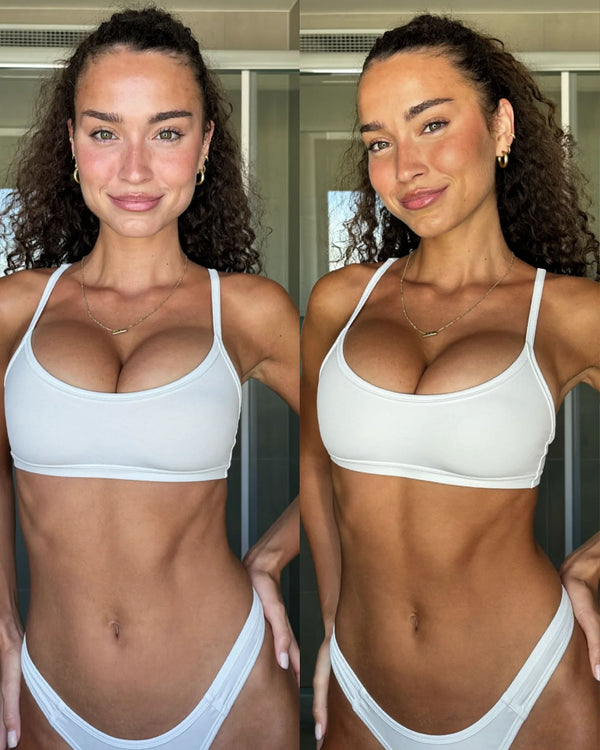
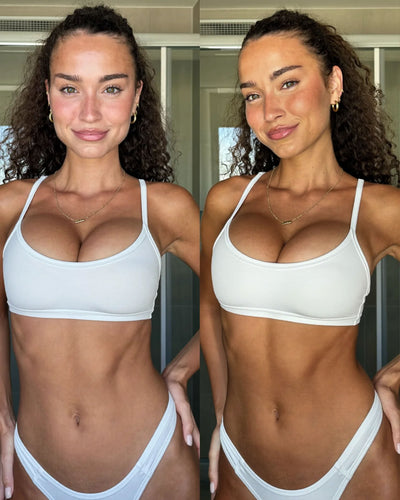
Yes. Layering self tanner is one of Toni's favorite ways to get a deeper color without making the tan look overly dark, muddy, or unnatural.
One of the simplest methods is to apply your first layer of self tanner, allow it to develop, rinse it off, and then apply another layer the following day. Toni regularly uses this method herself.
"I'll do one layer of self tanner, sleep in it, rinse it off, and then the next day I'll apply another layer," Toni says. "I'm significantly darker with two layers versus just one."
The important thing is that layering doesn't mean you have to keep applying product immediately on top of wet or undeveloped tanner. Allowing the first layer to develop gives you a much better idea of your starting color before deciding how much additional depth you want. For more on how that development window actually works, see how long a spray tan lasts and how to maintain it.
↑ Back to topDoes Layering Self Tanner Make It Blotchy?
A common concern among experienced self tanners is that applying more than one layer will cause the tan to become blotchy or make it fade unevenly.
In Toni's experience, layering itself isn't what causes those problems. Your preparation, application technique, product compatibility, and the color you're building all matter much more.
When you layer strategically, you can actually create a more customized and even-looking tan than you would get from simply choosing an extremely dark formula and applying it all at once.
The goal isn't to pile on as much DHA as possible. It's to build the right color.
↑ Back to topCan You Mix Different Self Tanners Together?
Yes, you can mix different self tanners together, but Toni recommends thinking about the formulas you're combining rather than randomly mixing two products just because you want to get darker.
This is something Toni has extensive experience with. Before focusing on self tanning at home, she worked with professional spray tanning solutions and would create custom blends for clients.
She would often combine a lighter solution with a lower DHA level with a medium or higher DHA formula. The purpose wasn't simply to make the tan darker. It was to create a more balanced, even tone that was customized to the person.
That experience with professional spray tanning solutions translated directly into the way she approaches self tanner today.
Think About the Color Base
Not all self tanners have the same undertone. Toni has experience working with violet-based, red-based, and olive-based tanning solutions, and those differences can affect the final color. If you're not sure which undertone is right for you, our guide on finding your self tan shade breaks down how to choose.
When layering self tanner, her preference is to stay within the same general color base. If you start with a particular undertone, layering another product with a compatible undertone can help maintain a more cohesive result.
This is especially important when you're already happy with the tone of your tan and simply want more depth.
Think About DHA Levels
DHA is the ingredient responsible for developing the color in most self tanning products, and is regulated by the FDA as a color additive for cosmetic use — you can read more directly from the FDA's page on sunless tanners and bronzers. Generally, a higher DHA formula will develop into a deeper tan, while a lower DHA formula produces a lighter result.
But darker isn't always better.
Toni's preferred approach is often to use a darker DHA level as the base and then use a lighter formula for the second layer. This can create additional depth while keeping the final color looking soft and natural.
"If you use a self tanner with a lesser DHA on top, it creates a really pretty color but not super dark to where you look dirty," Toni explains. "It also fades evenly."
That distinction is important. Instead of trying to get your entire color from one extremely dark application, you can build the tan in stages.
↑ Back to topThe Best Way to Layer Self Tanner
For a full-body tan, Toni generally prefers starting with a mousse or foam formula as the foundation.
A mousse is easy to distribute over the body and gives you a consistent base to work with. Once that initial tan has developed, you have several options depending on how much additional color or glow you want.
Start With a Self Tanning Mousse
Apply your mousse evenly over your body as your base tan. Allow it to develop according to the product's instructions, then rinse if the formula requires rinsing.
Once you see the developed color, you can decide whether you want to add more depth or simply enhance the finish.
Layer With Gradual Self Tanning Lotion
If you want to gradually deepen your tan without adding a large amount of color all at once, a gradual self tanning lotion is a great option for layering.
You already have your base tan from the mousse. The gradual lotion can then build additional color over time while giving you more control over how dark you become.
This is especially useful if you like a deeper tan but don't want to jump several shades darker in a single application.
Use a Bronzing Mist for More Immediate Depth
If you want your existing tan to look darker and more bronzed, a bronzing mist can be layered over your self tanning mousse.
Toni particularly likes this approach when she wants to add more visible warmth and depth without completely changing the foundation of the tan.
MAKAI's bronzing mist is one example of a product that can be used on top of a self tanning mousse when you want to intensify the look of your tan.
Finish With a Shimmer Lotion
Sometimes you don't actually need more tanning ingredients. You just want your existing tan to look more luminous.
That's where a shimmer lotion can make a big difference.
Start with your mousse as the tanning base and then apply a shimmer lotion over the top. The shimmer catches the light and creates a bronzy, glowing finish that can make the tan appear richer and more radiant.
This is one of Toni's favorite ways to create a really pretty bronzed look without continually adding more DHA.
↑ Back to topShould You Use the Same Self Tanner Twice?
You can, and there's nothing wrong with using the same product for both layers if you already know you like the color it produces.
For example, you could apply your mousse, allow it to develop, rinse, and then apply another layer the next day. This is the simplest approach if you want significantly more color while keeping the same undertone and overall finish.
However, you don't necessarily need to use the exact same formula for both applications.
Mixing or layering different formulas gives you more control over the final result. You can use one product to establish your base color and another to adjust the depth, tone, or finish.
↑ Back to topLayering vs. Mixing Self Tanner: What's the Difference?
Layering means applying one tanning product after another. Mixing means combining two products together before applying them.
Both approaches can work, but they give you slightly different levels of control.
With layering, you can see how the first product develops before deciding what you want to add. This makes it easier to customize the final color.
With mixing, you are creating a blend before it goes onto your skin. This is similar to what Toni did when creating custom spray tan solutions for clients.
If you're new to combining formulas, Toni generally prefers layering because it's easier to adjust. You can always add more color, but it's much harder to undo an overly dark application.
↑ Back to topHow Toni Approaches Building a Deeper Tan
After years of both professional spray tanning and self tanning at home, Toni's approach is to think of tanning as customization rather than simply choosing the darkest shade available.
Her experience creating custom spray tan blends taught her that small changes in DHA level and undertone can make a significant difference in the final result.
That same principle applies at home.
- Start with a mousse or foam as your full-body base.
- Allow the first layer to develop before deciding how much more color you need.
- For additional depth, layer another tanning product rather than automatically choosing the darkest formula.
- Keep your color bases compatible when layering.
- Consider using a lower-DHA formula as a second layer for a softer, more natural-looking finish.
- Use a gradual tanning lotion when you want to build color slowly.
- Use a bronzing mist when you want more immediate bronzed depth.
- Use a shimmer lotion when you want more glow without necessarily adding more DHA.
The Bottom Line on Layering Self Tanner
Layering self tanner is absolutely an option if you want a deeper tan. In fact, it can give you more control over your color than relying on one extremely dark formula.
And yes, you can mix different self tanners. The trick is understanding what you're mixing and why. Consider the DHA level, color base, formula, and the result you're trying to achieve.
For Toni, years of professional spray tanning experience reinforced one simple idea: the best tan isn't necessarily the darkest tan. It's the one that's customized to look even, natural, bronzed, and flattering on your skin. For a fuller picture of what a well-developed tan should actually look like day to day, see self-tanning results you can actually expect.
Start with your base, build your color gradually, and don't be afraid to experiment with different formulas and finishes. Once you understand how your products work together, layering becomes less about "getting darker" and more about creating exactly the tan you want.
↑ Back to topFrequently Asked Questions About Layering Self Tanner
Can I apply self tanner twice to get darker?
Yes. Applying a second layer after the first has developed can create significantly more color than applying just one layer. Allowing the first application to develop before adding another layer gives you better control over the final result.
Can I mix two different self tanners?
Yes. Different self tanners can be mixed to customize the final color, particularly when you understand the differences in DHA levels and undertones. Toni's professional spray tanning experience included creating custom blends using different solution strengths and color bases.
Can I layer gradual tanning lotion over self tanner?
Yes. A gradual tanning lotion can be applied over a developed self tan to build additional color more gradually. It's a good option when you want more depth without making a dramatic jump in color.
Can I use bronzing mist over self tanner?
Yes. A bronzing mist can be used over a self tanning mousse when you want to add additional warmth and depth to your existing tan.
Can I use shimmer lotion over self tanner?
Absolutely. Shimmer lotion can be layered over your self tan to create a luminous, bronzy finish. This is particularly useful when you want your tan to look more radiant without necessarily adding another layer of DHA.
Should I use the same color base when layering self tanner?
That's Toni's preference. When layering, staying with a compatible color base can help maintain a more even and cohesive tone. Violet, red, and olive-based formulas can produce different results, so consider the undertone of your existing tan before adding another product.
↑ Back to top


