






Can you get tan in the shade? What You Need to Know

Quick Answer
Yes, you can get a tan in the shade. UV rays reflect off surfaces like sand, water, and concrete and reach your skin indirectly, even when you're not sitting in direct sunlight.
In This Guide
- Why You Can Still Tan in the Shade
- Do You Need Direct Sunlight to Tan?
- What Toni Sees Constantly with Clients
- Factors That Affect Your Exposure
- How to Tan Safely in the Shade
- Toni's Actual Advice: Tan Before You Go
- Key Takeaways
- Frequently Asked Questions
Why You Can Still Tan in the Shade
Shade reduces direct sunlight, but it doesn't block UV rays completely. There are two types worth understanding.
UVA Rays
These penetrate deep into the skin and are the ones most responsible for tanning. They're not fully blocked by shade structures and reflect easily off nearby surfaces.
UVB Rays
These are more closely associated with sunburn. Shade blocks more UVB than UVA, but not all of it. Indirect exposure can still trigger melanin production, which is why you can tan or burn without ever sitting in direct sun.
Do You Need Direct Sunlight to Tan?
No. Tanning is your skin's response to UV rays, not to visible sunshine or heat. UV reaches you straight from the sun, but it also bounces off the ground and the water around you and passes through thin cloud cover, so you can build color under a parasol, on a covered patio, or on an overcast afternoon without ever feeling the sun on your skin.
What matters most is the UV index for the day and how long you're outside. On high UV days, you can pick up color, or burn, well out of direct sun. The one time you won't tan is at night, since there's no UV once the sun goes down.

What Toni Sees Constantly with Clients
This is one of the most common misconceptions Toni runs into during consultations. Clients regularly assume that because they spent most of a beach day under an umbrella, a pool cabana, or a patio cover, they weren't exposed to enough sun to tan or burn. They're often surprised to come back with noticeable color or uneven tan lines anyway. The confusion almost always comes down to underestimating how much UV light reflects off water, sand, and concrete, even when you're technically in the shade the whole time.
Factors That Affect Your Exposure
Time of Day
UV intensity is generally strongest around the middle of the day, though the exact window shifts with season, latitude, altitude, and weather. It's more useful to think in terms of avoiding prolonged midday exposure than memorizing a rigid hour range.
Skin Type
Fair skin tans and burns faster, which makes it worth pairing with a light to medium self tanner for a safer glow. Deeper skin tones can handle more sun exposure but still need protection year round.
Reflective Surfaces
Water, sand, snow, and concrete all bounce UV rays back at you from angles an umbrella simply can't block. This is the single biggest reason shade feels safer than it actually is. In one beach study, most people who relied on an umbrella alone still ended up sunburned (source: JAMA Dermatology).
How to Tan Safely in the Shade
- Wear a broad-spectrum SPF 30 or higher, even in the shade, and reapply every two hours, especially if you're swimming or sweating.
- Use shorter, timed intervals instead of long uninterrupted stretches, and change position to avoid overexposing one side.
- Afterward, stay hydrated, moisturize, and use a cooling after-sun product to help your skin recover.
Just like shade, winter sun has its limits too. Knowing how to get a tan in the winter can help you keep your glow going year round. And if you're wondering whether sunscreen actually stops color from developing at all, we cover that directly in does sunscreen prevent tanning.
Toni's Actual Advice: Tan Before You Go
The recommendation Toni gives most often before a beach vacation is simple: apply self-tanner a day or two before you leave instead of trying to build color once you're there. That way you can actually enjoy the trip, wear your sunscreen properly, and spend time in the shade without feeling pressure to chase a tan you don't need.
If you do pick up a little natural color during the trip anyway, wait until it starts to fade before doing a light self-tanner touch-up rather than layering more product over freshly sun-exposed skin. Curious how long that fade actually takes? Our guide on how long self tanner lasts covers timing your next application right. The goal is a natural, even result, not trying to out-tan the sun itself.

Key Takeaways
- Tanning in the shade is real. UVA rays reflect off sand, water, and snow and still reach your skin.
- Shade reduces UV exposure but does not eliminate the risk of tanning or sunburn.
- Wear SPF 30 or higher and reapply every two hours, even under an umbrella.
- Fair skin burns faster and pairs well with a light to medium self tanner for a safer glow.
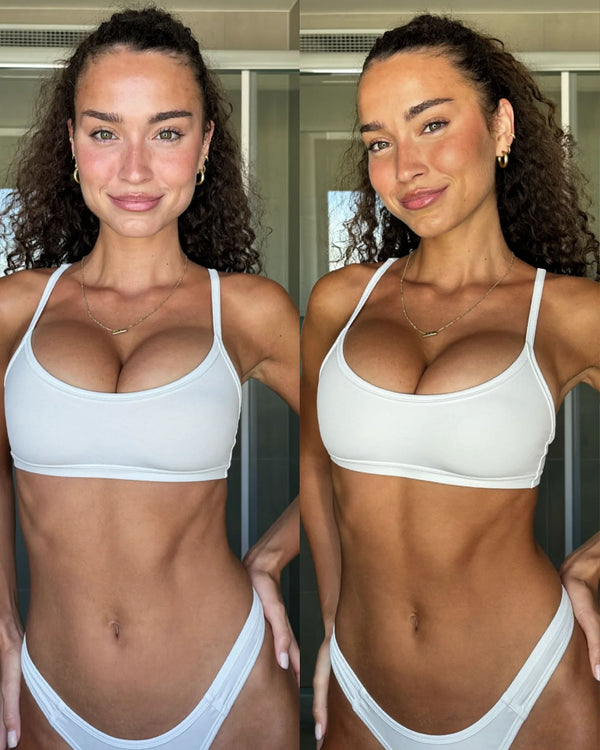
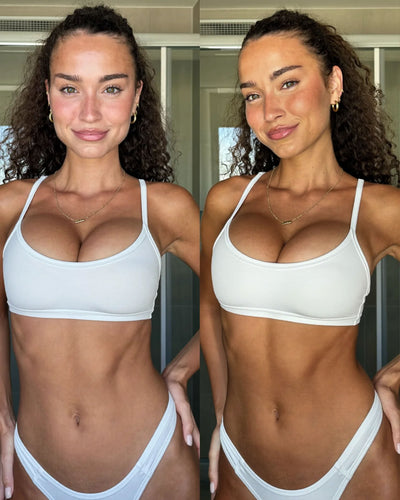
- For predictable color without the guesswork, self-tanner remains the most reliable option.
Frequently Asked Questions
Can I still get sunburned if I stay in the shade all day?
Yes. Shade reduces direct UV exposure but doesn't block it entirely, especially near reflective surfaces like water, sand, or concrete.
Will I still tan in the shade?
Most likely, yes, just more slowly than you would in full sun. How much color you pick up depends on the UV index, how long you stay out, your skin type, and what's around you. A shaded lounge chair on the sand lets in more UV than a shady spot on the grass, because sand reflects much more of it.
Can you tan in the shade by the pool or under a parasol?
Yes. Pool water and light-colored pool decks reflect UV back up at you, and a parasol or cabana only blocks what comes from directly overhead. If you're spending hours poolside in the shade, wear and reapply sunscreen the same way you would in the open.
Can you tan on a cloudy day?
Yes. Clouds filter some UV, but a lot of it still gets through, which is why people are often surprised to come home with color, or a burn, after an overcast day outside.
Does sitting under an umbrella fully protect my skin?
No. An umbrella blocks direct overhead sun, but UV rays reflecting off the ground and surrounding surfaces can still reach you from the side.
What SPF should I wear if I'm mostly staying in the shade?
A broad-spectrum SPF 30 or higher, reapplied every two hours, is the standard recommendation regardless of how much direct sun you expect to get.
Is self-tanner a good alternative to trying to tan naturally?
Yes. Self-tanner gives you predictable, even color without relying on UV exposure at all, which is why how to self tan is worth reading if you want to make it your primary routine instead of a backup plan.
Where This Leaves You
Confidence shouldn't depend on how much time you spend chasing a tan. Some of the best moments happen outside, at the beach, by the pool, on vacation, or just on a sunny afternoon, and you shouldn't have to choose between protecting your skin and feeling good in it. Self-tanner works best as the starting point, not the backup plan. Arrive with the glow you want, wear your sunscreen, enjoy the shade when you need it, and let the memories be what lasts, not UV damage.
Want a reliable glow without the guesswork of shade tanning? Skip the UV risk altogether with Sunless By Makai Self Tanners, including our self-tanning mousse, tanning mist, and tanning bundles.
Shop Self Tanner.


