






What to Wear to Hot Yoga

Short answer: For hot yoga, wear fitted, lightweight, moisture-wicking pieces, think a fitted tank or crop top, a supportive sports bra, and leggings or shorts with real four-way stretch. Skip anything cotton, baggy, or heavy. And if heated classes leave you feeling drained instead of energized, that's worth paying attention to. We share our own experience further down.
What to Wear to Hot Yoga (and What Not to Wear)
Stick with fitted tanks or crop tops, breathable performance tees, a supportive sports bra, lightweight leggings or yoga pants, and performance or compression shorts. Wear whatever makes you feel confident walking in.
Skip sweatpants, fleece, anything in 100 percent cotton, long sleeves, and anything baggy or heavy. Loose shorts in particular tend to shift during inversions right when you need them to stay put.
↑ Back to topThe Fabric Standard We Actually Care About
Almost every activewear brand claims moisture-wicking. That claim means very little on its own. What actually matters is how a legging feels thirty or forty minutes into a workout. With a lot of leggings, that's when the small problems start: the waistband slides during squats, the fabric bunches behind the knees, or you're stopping mid-set to adjust after a few rounds of lunges or burpees.
SoftSculpt was built to solve those exact problems. It holds its shape, stays in place through compound movements, and still feels soft enough that you don't want to change out of it the second class ends. We don't judge a fabric by how it looks standing in front of a mirror for five minutes. We judge it by how it performs an hour into real movement.
↑ Back to topFit Matters More Than People Think
Loose clothing might feel appealing before class, but fitted gear is actually your best ally in hot yoga. Fitted pieces stay put during inversions, avoid fabric drag through transitions, and let an instructor actually see your alignment. Not sure what the right fit means for your body specifically? We break that down in how to choose activewear that actually fits.
Look for sports bras that support without restricting your breathing, and leggings with a high waistband, real four-way stretch, and a fit that doesn't slip. The goal is always gear you can forget you're wearing once class starts.
↑ Back to topShorts or Leggings
Shorts run cooler and move more freely, which works well for standing poses and flows, though bare skin on the mat can get slippery during arm balances. Leggings give you more grip for floor work and inversions. If you go with leggings, choose something lightweight and genuinely moisture-wicking so you're not fighting the heat on top of the workout.
↑ Back to topIf You're Doing Bikram Specifically
Bikram follows the same principles with an even stronger need for heat management. Most people prefer shorts or cropped leggings for maximum airflow, and moisture-wicking isn't optional here. A polyester or nylon blend will outperform cotton by a wide margin in that room.
↑ Back to topA Few Other Essentials
- A water bottle. Aim for at least 16oz before class starts.
- A towel, both to wipe sweat and to keep your grip on the mat during slippery poses.
- A change of clothes for after, something comfortable you actually want to put on.
Why We Stepped Away From Hot Classes
Everything above is written for people who love hot yoga or want to try it. We'll be upfront, though: neither of us practices it anymore. Toni did for a while, along with other heated and high-intensity classes like hot Pilates and fast-paced circuit workouts. Over time, she noticed her body wasn't bouncing back the way it should. Instead of leaving class energized, she felt wired or run down, and she saw changes in her weight that didn't match how hard she was training. After Patt dug into the research, the common thread wasn't any one class. It was stacking heat and high intensity together, week after week.
That's her experience, not a rule for everyone. Plenty of people thrive in heated classes. But if any of that sounds familiar, our note on cortisol below is worth a read.
↑ Back to topWhat Toni Learned Wearing It
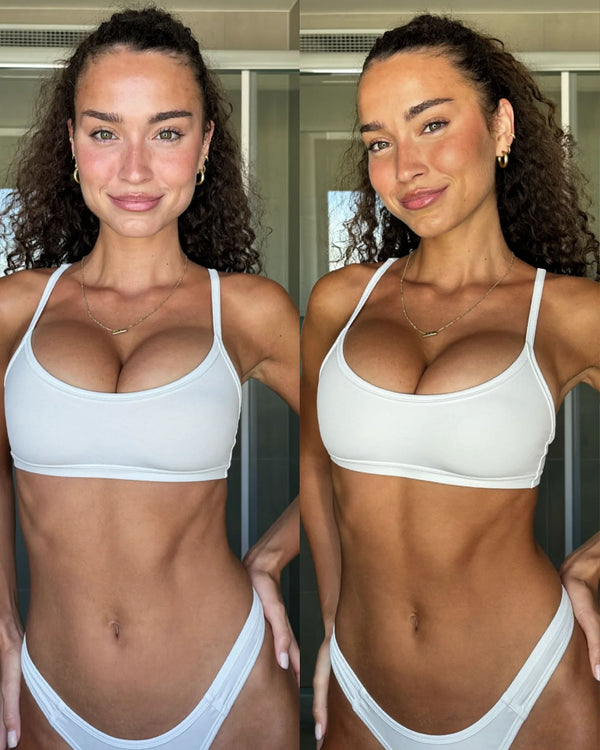
One thing Toni noticed during her hot yoga days was how the self tanner held up. Dripping sweat, and the tan didn't budge. She also learned to prioritize fabric that breathed and moved with her without needing constant adjustment. The worst feeling in that kind of heat isn't the heat itself, it's having to reset your entire movement because of your outfit instead of your own muscle fatigue.
↑ Back to topA Word on Cortisol
Exercise is a healthy kind of stress, and your body releases cortisol, its main stress hormone, in response to it. That's normal, and it's part of how training makes you stronger. Cortisol tends to climb as workouts get harder and more exhausting (research on exhausting exercise), and training in a heated room adds another layer of physical stress on top.
Most people recover from that just fine. Some find that combining heat and high intensity several times a week leaves them feeling wired, drained, or like they're not recovering the way they expect. If that's you, it isn't a sign you're doing it wrong. Your body may simply do better with a different mix, like the same workouts in a room that isn't heated, or more low-impact days in between. And if something feels consistently off, a doctor can help you figure out what's going on.
↑ Back to topWhat We Actually Want You to Take Away
If there's one thing we'd want you to take from this, it's that fitness should leave you feeling better, not more stressed. Whether you love hot yoga or decide a cooler studio is the better fit for your body, the goal was never to prove how much discomfort you can tolerate. It's to find movement you enjoy, can do consistently, and that leaves you feeling stronger and more confident walking out than you were walking in.
That's the same philosophy behind every MAKAI product. We don't judge success by how something looks in the mirror for five minutes. We judge it by how it performs an hour into your workout, how it holds up through real movement, and whether it helps you feel confident enough to focus on yourself instead of constantly adjusting your clothes or worrying about your self tan. Confidence isn't about pushing through unnecessary discomfort. It's about removing distractions so you can move well, feel good, and enjoy the process. That's what actually lasts once the workout is over.
Curious about a strength-based alternative? Start with what is sculpt yoga. If heat isn't your thing, these low-impact formats might fit better, our Lagree vs Pilates breakdown can help you compare. And fabric and fit matter even more once the room heats up, so check out leggings vs yoga pants for more on choosing the right bottom.
Shop SoftSculpt Activewear or Self Tanner.
↑ Back to topFrequently Asked Questions About What to Wear to Hot Yoga
What should I wear to hot yoga?
Fitted tanks or crop tops, breathable performance tees, a supportive sports bra, lightweight leggings or yoga pants, and performance or compression shorts. The goal is fabric that stays put and breathes, not something you have to keep adjusting.
Do I need special yoga pants for hot yoga?
No, you don't need pants made just for hot yoga. What matters is the fabric and fit. Look for a lightweight nylon or polyester blend that pulls sweat away from your skin, has four-way stretch, stays opaque when you fold forward, and has a high waistband that won't slide down once you're damp. Most good performance leggings check all of those boxes.
What should you not wear to hot yoga?
Leave the heavy, loose, and absorbent pieces at home: sweatpants, fleece, long sleeves, 100 percent cotton, and baggy tops that fall over your face in downward dog. Thin fabric that turns see-through when it's stretched and wet is another one to avoid. And skip heavy lotion or oil right before class, since it makes your hands and feet slide on the mat.
Should I wear shorts or leggings to hot yoga?
Shorts run cooler and move more freely for standing poses and flows, but bare skin can get slippery during arm balances. Leggings give you more grip for floor work and inversions. Choose whichever tradeoff matters more for your practice.
Why does hot yoga make some people feel drained instead of good?
Heat and high intensity are both forms of physical stress, and together they can push cortisol, your body's main stress hormone, higher than a cooler, easier session would. Many people recover from that without a problem, while others feel wired or run down afterward. If that's how your body responds, it's a normal reaction, not a sign you're practicing incorrectly.
Can I wear cotton to hot yoga?
It's best to skip it. Cotton doesn't wick moisture the way polyester or nylon blends do, which means it holds onto sweat, gets heavy, and doesn't perform well in a heated room.
Is Bikram different from regular hot yoga when it comes to what to wear?
The principles are the same, just more important. Bikram's heat makes moisture-wicking fabric and maximum airflow essential rather than optional. Shorts or cropped leggings tend to work best.
What should I bring to a hot yoga class besides the right clothes?
A water bottle with at least 16oz before class, a towel for sweat and mat grip, and a comfortable change of clothes for afterward.
↑ Back to top


