


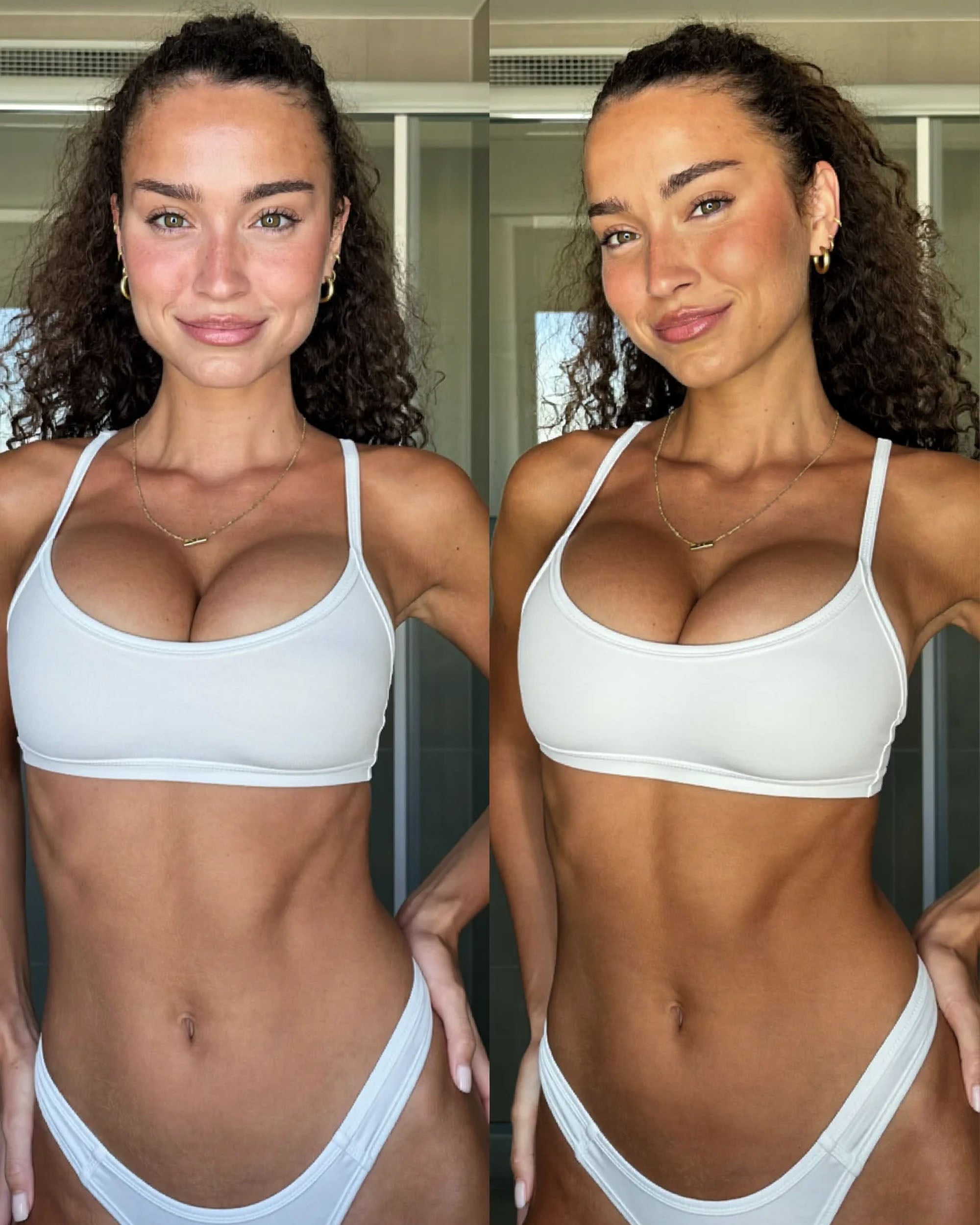


Make the Switch from Lovingtan | Discover Your New Favorite Tanner

Short answer: People switching from Loving Tan to MAKAI are usually solving the same handful of problems: orange or red undertones on certain skin tones, a lingering smell, transfer onto sheets, and patchy fading. MAKAI was built specifically to fade naturally instead of patchy, with a formula that doesn't rely on overdoing DHA to force a fast, dark result. That's the biggest difference customers actually notice.
Table of Contents
- Why We're Comparing Ourselves to Loving Tan
- The Real Complaints We Hear About Other Self Tanners
- Why MAKAI Fades Differently
- Toni's Sister's Story
- What Customers Say After Switching
- Easy Removal, and What's Coming Next
- The Gradual Lotion Difference
- FAQs
Why We're Comparing Ourselves to Loving Tan
If you're reading this, there's a good chance you've used Loving Tan before, or you're trying to decide between the two. We're not going to pretend that's not why you're here. Toni has spent 20 years in the tanning industry, first as a professional spray tan artist, now building MAKAI, and she's heard the same complaints about self tanners over and over, whether or not she's the one hearing them firsthand or experiencing them herself. This post is an honest look at what those complaints usually are, and why MAKAI was built specifically to solve them.
The Real Complaints We Hear About Other Self Tanners
We hear this over and over from customers. They aren't usually looking for a darker tan, they're looking for a self tanner that finally fixes the problems they've dealt with for years.
- Orange or red undertones, especially on certain skin tones
- A lingering smell that doesn't fade with the tan
- Transfer onto sheets and clothes, something we've written a full guide on avoiding at does self tanner stain clothes and sheets
- Patchy, uneven fading instead of a gradual, natural fade
- A sticky, tacky feeling from gradual lotion formulas
Those are exactly the frustrations our customers told us they wanted to leave behind, and they're the same reasons so many keep coming back to MAKAI.
Why MAKAI Fades Differently
The biggest difference customers notice isn't how dark MAKAI gets on day one, it's how it fades over the following week. A lot of self tanners, including some of the bigger names in the category, lean on high DHA levels to force a fast, dark result. That approach can look great immediately, but it often fades patchy instead of gradually, which is exactly the complaint Toni heard constantly during her years as a professional spray tan artist.
We built MAKAI's formula intentionally around a better fade, not just a darker first application. That meant not overdoing the DHA level, even though a more aggressive formula would have been the easier, faster route to market. Toni's had two decades to hear every version of this complaint, and building a genuinely natural fade was the whole point.
Toni's Sister's Story
One of the best examples of this isn't a stranger's review, it's Toni's own older sister. She was a self-described never-tanner for most of her life, someone who simply didn't use self tanner at all. Since switching to MAKAI, she's become the opposite, someone who wants to be in it constantly.
What stands out most is how she maintains it. She doesn't even exfoliate between applications anymore, she just applies fresh product directly over her existing tan. The fade is gradual and even enough that layering on top of it still looks natural, something that would create obvious patchiness with a formula that fades unevenly. That's not a marketing line, that's just what happens when the fade itself is genuinely gradual. If you're figuring out your own reapplication rhythm, our guide on how often you should self tan covers the right cadence for different goals.
What Customers Say After Switching
"This is the only self tan I've found that doesn't smell awful and doesn't immediately transfer to clothes or sheets. No orange color. Just a good, easy and safe tan." Verified MAKAI Customer
"Love how smoothly this goes on. It's flawless and the color could not be better. Obsessed. You've got a fan for life." Savannah S., Verified Customer
"My favorite self tanner, hands down... it doesn't streak, doesn't have an overwhelming smell, and fades nicely." Kensi R., Verified Customer
"I've tried all the tanners out there... my husband said, 'I'm surprised you don't smell like self tanner right now.' I also woke up with zero self tan marks on our sheets." Jackilyn S., Verified Customer
Curious what a larger sample size says? We surveyed 550 real customers about exactly these kinds of complaints, you can see the full results in what 550 customers actually said.
Easy Removal, and What's Coming Next
MAKAI isn't difficult to remove compared to formulas that build up stubbornly over multiple applications, a normal shower and gentle exfoliation is usually enough. That said, we're honest that we're not done improving this part of the experience either, we're actively working on a dedicated self tanner remover, and we'll have more to share on that once it's ready.
The Gradual Lotion Difference
If you've used a gradual tanning lotion before and didn't love the sticky, tacky feeling it left behind, that's another common complaint we built our gradual lotion specifically to avoid. It absorbs cleanly instead of sitting on top of the skin, so it can genuinely double as a daily moisturizer instead of feeling like a separate, uncomfortable step. If you're still deciding which format actually fits your routine, our Mousse vs. Lotion vs. Cream guide breaks it down.
FAQs
Why do some self tanners turn orange while others don't?
It usually comes down to DHA level and undertone in the formula. Higher, more aggressive DHA levels can push certain skin tones toward orange or red, which is part of why we formulated MAKAI to avoid that.
Why does MAKAI fade more evenly than some other brands?
Because the formula wasn't built to force the darkest possible result on day one. A more balanced DHA level fades gradually instead of patchy, which is the biggest thing customers switching from other brands notice.
Is MAKAI hard to remove compared to other self tanners?
No, a normal shower and gentle exfoliation is usually enough. We're also developing a dedicated self tanner remover for an even easier reset.
Does MAKAI's gradual lotion feel sticky like other gradual tanners?
No, it's formulated to absorb cleanly rather than sit on top of the skin, so it can double as a daily moisturizer instead of feeling like an extra step.
What do most people complain about with other self tanners?
Orange or red undertones, a lingering smell, transfer onto sheets and clothes, and patchy fading, the same handful of issues come up again and again across the category.
Ready to see the difference for yourself? Shop the full MAKAI self tanner collection.


